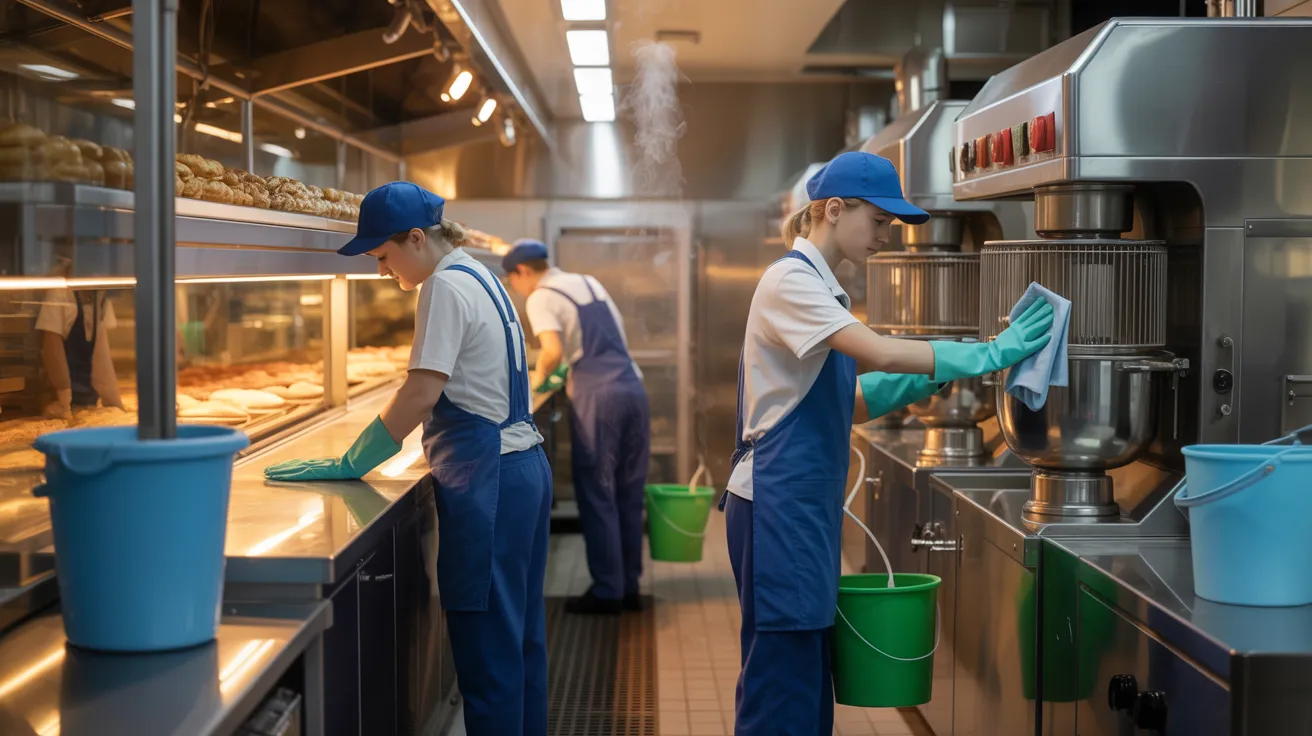
Food hygiene and professional sanitation experts in Brampton assist you in maintaining restaurants, food supply centers, baking operations, warehouses, and food service units to code. They disinfect frequently touched areas, food preparation zones, equipment, floors, drains, restrooms, and prep areas using certified sanitizers, correct concentration, and recorded contact times.
Essential Summary
- Sanitation experts from Brampton assist restaurants, grocery departments, commissaries, warehouses, bakeries, schools, mobile vendors, and allergen-sensitive operations.
- Frequently contacted areas, food-contact equipment, kitchens, floors, drains, restrooms, and storage areas are treated using sectional methods to eliminate cross-contamination.
- Certified vendors confirm proper chemical concentration, compatibility, and exposure duration, then document conclusion with swabs, reviews, and remedial documentation.
- Routine, regular, and cyclical duties designated by location make up cleaning timelines founded on hazard, production volume, format changes, incidents, and standards.
- Select contractors with hazard analysis knowledge, public-health, expertise, WHMIS, preparation, liability, credentials, colour-coded instruments, and audit-ready maintenance files.
Brampton Operations That Need Food Safety Cleaning: Which Ones?
Any Brampton facility that handles, maintains, prepares, packages, or offers food needs sanitation protocols. You must use it if your facility falls under public health inspection, food premises regulations, or internal HACCP-based controls. That requirement covers food service venues, employee cafes, supply centers, retail departments, meat shops, fish areas, local stores, and institutional food prep areas.
Documented food sanitation is also needed in warehouses, food manufacturing plants, cold storage sites, retail bakeries, school nutrition programs, banquet halls, and meal delivery hubs. Portable and seasonal operations count as well, including food trucks, event vendors, and temporary stalls. Your venue must have documented cleaning protocols if your team work with ingredients, section finished dishes, heat items, or keep allergens organized. In Brampton, sanitation remains not discretionary; it forms legal, operational, and consumer protection compliance.
What Do Brampton Cleaning Professionals Handle?
You need skilled cleaning experts who disinfect high-touch surfaces, cooking areas, flooring, and restroom facilities to ensure compliance with food safety and health standards. These locations are prioritized because they carry the greatest contamination risk, slip and fall dangers, and health code violations.
When you know their cleaning scope, you can verify that your facility's cleaning scope meets compliance and operational standards.
Sanitizing High-Touch Zones
Professional Brampton cleaners appreciate that high-touch surfaces need disinfection since these areas contain microbes and organic residue. You need a written protocol for cleaning all high-touch items including handles, plates, switches, railings, control surfaces, POS systems, and refrigeration equipment. Employing area assessment techniques, specialists pinpoint every frequently handled point and determine cleaning intervals
in cases where outcomes are below target thresholds. Furthermore, they avoid cross-contact by replacing cloths, following directional cleaning patterns
Cooking Zones, Walking Surfaces, and Restroom Environments
Expect Brampton cleaning experts to target kitchens, floors, and restrooms because each area carries distinct foodborne illness prevention, slip-and-fall, and sanitation risks. In industrial kitchens, you need degreasing on cook lines, equipment exteriors, drains, prep surfaces, and splash zones to reduce contamination and pest pressure.
Floor care that is recorded should also be anticipated. Technicians scrub and extract buildup from grout, tile, and vinyl flooring, then apply correct drying techniques so you can reduce slip incidents and meet regulatory standards. They also address entry points where dampness and dirt enter the building.
In restrooms, cleaners disinfect touchpoints, fixtures, partitions, dispensers, and waste containers then restock supplies and control odours. They also service restaurant moprooms, where chemical storage, sink hygiene, and drainage conditions can affect sanitation compliance and staff safety daily.
Food Safety Cleaning Significance for Brampton Businesses
To comply with regulatory mandates and pass inspections, Brampton facilities must maintain appropriate cleaning protocols. You also minimize cross-contamination by cleaning and sanitizing food-contact surfaces, equipment, and high-touch areas correctly. Most importantly, you safeguard community wellness by reducing the chance of food poisoning in your establishment.
Regulatory Code Requirements
Since Brampton food operations must follow stringent health requirements, your cleaning procedures directly influences your competence to adhere to health codes, defend diners, and avoid regulatory penalties. You must maintain hygienic food handling zones, verifiable cleaning logs, appropriate product handling, and traceable training practices that meet municipal and provincial inspection expectations.
Detailed cleaning files enable you to show due diligence during compliance reviews and establish your methods remain reliable, reproducible, and documented. Effective sanitation moreover facilitates allergen management by reducing residue on joint machinery and commonly contacted zones.
Cross-Contamination Avoidance
Maintaining regulatory compliance copyrights on your capacity to prevent cross-contamination during everyday food preparation and sanitation. You must separate raw ingredients from ready-to-eat foods, sanitize prep surfaces between tasks, and position cleaning agents away from food surfaces. Explicit protocols lower contamination threats and reinforce steady regulatory adherence.
You might establish allergen separation to stop main allergens from reaching shared surfaces, containers, or equipment. Apply separate boards, color-marked equipment, and rigorous tool identification so team members avoid blending products during preparation or service. Enforce washing hands following uncooked meat, fish, egg products, or allergens. Swap cleaning rags frequently, and test disinfectant concentration using strips. When you train staff to follow these controls each shift, you develop a more sanitary, secure business that meets Brampton's food safety expectations daily.
Public Wellness Protection
Should food safety cleaning break, you don't simply risk a failed inspection—you increase the potential of contamination-related sickness impacting customers, staff, and the wider Brampton community. You also weaken your role in protecting public health, especially in busy food facilities where contamination can spread quickly through surfaces, equipment, and touchpoints.
You require sanitation protocols that remove contaminants, disinfect correctly, and confirm effectiveness. This involves adhering to exposure times, utilizing approved disinfectants, logging schedules, and training employees to meet regulatory standards. These mechanisms support pathogen reduction by limiting pathogens before contaminating food or surfaces. Across Brampton, effective sanitation safeguards vulnerable groups, limits outbreak risk, and demonstrates accountability. When you follow standards, you go beyond requirements—you substantially lower hazards and facilitate secure food handling throughout the area.
How Does Cleaning Support Food Safety Compliance?
Maintaining strict sanitation practices supports food safety compliance by decreasing contamination threats, preventing pathogen multiplication, and keeping your facility compliant with sanitation requirements under HACCP-based programs and public health regulations. You ensure that food-handling surfaces are visibly clean and microbiologically controlled, supporting documented preventive controls and inspection readiness.
Systematic cleaning further strengthens allergen management by extracting residues that can provoke undeclared allergen exposure. When you match validated sanitation procedures with standards training, your staff can adhere to uniform procedures, use approved chemicals properly, complete records properly, and respond to irregularities prior to issues intensify. Consistent cleaning discover now promotes traceability, verifies corrective steps, and demonstrates commitment during audits. Additionally, it assists you maintain product safety, copyright compliance standards, and reduce the chances of compliance actions, mass recalls, formal complaints, and unnecessary health hazards.
Determining When to Arrange Commercial Cleaning
Step up cleaning frequency during high-volume production, production changeovers, spillage occurrences, and following maintenance work.
facility closures, weather-related soil accumulation, or pest-related management timeframes.
What Should You Look For in Brampton Cleaning Experts?
Begin by evaluating providers based on sanitation compliance standards—not solely on price alone. You should confirm that each organization comprehends CFIA, public health, and HACCP-based requirements applicable to your facility. Request insurance certificates, WHMIS compliance, staff training documentation, and oversight procedures. Assess whether technicians recognize cross-contamination risks, chemical handling protocols, and verifiable sanitation records.
You should also assess business dependability and accountability. Request references from food facilities in Brampton, then examine response times, corrective actions, and communication standards. Confirm the company participates in supplier audits and can present audit-ready records when regulators or third parties request evidence. Check whether equipment is maintained is performed, color-coded implements are used appropriately, and site-specific hazards are recognized. A qualified provider protects regulatory adherence, product integrity, and your brand reputation.
What details should a sanitation plan contain?
Write out a framework that outlines every sanitation task, standard, and responsibility before starting production. You should record cleaning frequencies, approved chemicals, dilution rates, contact times, tools, and verification methods for each zone, surface, and piece of equipment. Ensure you include pre-operational inspections, corrective actions, and employee training requirements.
Your plan should also tackle cross-contamination controls, waste handling, pest-prevention measures, and documented schedules for facilities, drains, flooring, and food-preparation surfaces. Outline how you'll separate raw and ready-to-eat processes, facilitate ingredient tracking, and maintain accurate allergen labeling through validated cleaning between product changes. You should establish accountability, keep signed records, and evaluate results against regulatory standards, HACCP controls, and customer requirements. When gaps appear, modify procedures immediately and retrain staff.
Popular Inquired Questions
Will sanitation providers manage overnight shifts at Brampton properties?
If you run controlled spaces, you'll also require documentation that enable audits and ensure compliance.
Do sanitation professionals offer emergency spill response services?
Yes, you can discover many Brampton cleaning professionals providing hazard containment options. They manage contamination, evaluate risks, contain affected zones, and begin swift decontamination to minimize exposure and prevent business disruption. You should verify response rates, credentials, safety protocols, and waste procedures. If your facility must adhere to regulations, pick a provider that documents events, adheres to standards, and ensures audit compliance.
Are eco-friendly disinfectants suitable for food-contact surfaces?
In essence, green disinfectants are safe for food preparation areas provided you source solutions certified for food use that meet regulatory standards. Check exposure duration, dilution rates, and rinse procedures in advance of use. Botanical formulations reduce harsh chemical exposure, although you require evidence of effectiveness against harmful bacteria. To ensure surfaces without residue, stick to manufacturer directions precisely and ensure the disinfectant satisfies applicable food industry sanitation standards.
Can maintenance plans flex with seasonal shifts?
Without question, maintenance plans adapt well for seasonal variations. Revise schedules, labor allocation, disinfectants, and validation steps to correspond to seasonal workflows while maintaining compliance standards. Minimize operational delays by timing disinfection around equipment transitions, maximum output, and usage patterns. Additionally revise written procedures, instruction programs, and environmental monitoring to reflect temporary risks, novel allergens, or elevated soil levels. Periodic assessments ensure your plan current.
Will professional cleaning services teach employees on sanitation best practices?
Yes, commercial cleaners typically educate your staff on hygiene standards. You get staff training on proper chemical use, contact times, contamination control, equipment disassembly, and record keeping. They typically align instruction with HACCP, GMP, and CFIA or local public health requirements. Many also conduct sanitation audits to confirm adherence, identify gaps, and reinforce corrective actions. This helps you sustain uniform processes, succeed in audits, and reduce food safety risks daily.
Summary
Partnering with Brampton commercial cleaning and food safety professionals means more than cleaning—it guarantees your operation meets inspection standards and your protocols are defensible. From kitchen areas to production zones, each sanitized surface and maintained corner lessens contamination risk and prevents major expenses. By arranging service at suitable frequencies and executing a comprehensive cleaning strategy, you shield your workforce, your customers, and your image. In a tightly controlled market, sanitary conditions are non-negotiable—they're critical to business success.